Buying Waterfront Property in Fairfield County: What the Listing Won't Tell You
By Matt Caiola
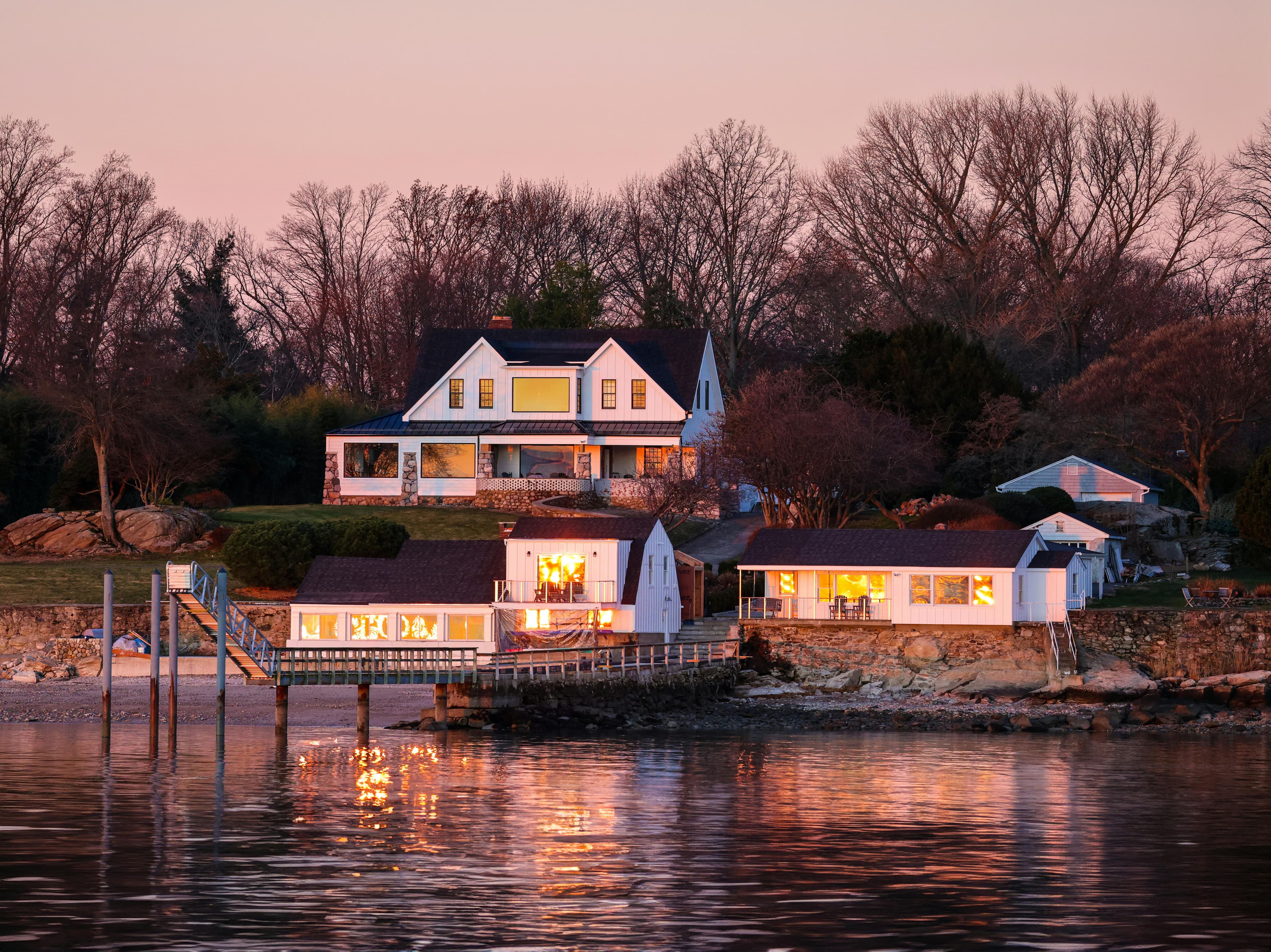
Waterfront property in Fairfield County carries a premium that requires no explanation. A home on the water (whether Long Island Sound frontage in Old Greenwich, Saugatuck River access in Westport, or harbor views in Norwalk) commands 30 to 50 percent more than an equivalent inland property. What most buyers underestimate is the additional complexity that comes with that premium. Coastal real estate in Connecticut involves a layer of regulatory, structural, and insurance considerations that simply do not apply to inland purchases.
I have represented buyers on waterfront transactions from Tod's Point in Greenwich to Compo Beach in Westport. The properties are exceptional. The due diligence they require is also exceptional. Here is what I walk every waterfront buyer through before they commit.
Flood Zones and FEMA Maps
Every waterfront buyer needs to understand their property's FEMA flood zone designation before making an offer. Zone AE means the property sits in a Special Flood Hazard Area with a base flood elevation determined by FEMA. Zone VE adds wave action risk, these are the most exposed coastal properties. Zone X (shaded) indicates moderate risk, and Zone X (unshaded) means minimal risk. The designation directly impacts your insurance costs, your ability to renovate, and in some cases, your resale value.
FEMA updated its flood maps for coastal Fairfield County in recent years, and many properties that were previously in Zone X were reclassified into AE or VE. If you are buying a property where the seller has had a low-cost flood policy based on the old maps, understand that your policy will be repriced under the new designation. I have seen annual flood insurance premiums jump from $1,200 to $8,000 or more on Saugatuck Shores properties in Westport after reclassification.
Seawalls, Bulkheads, and Shoreline Structures
Coastal properties in Greenwich, Darien, and Norwalk often include seawalls, riprap, or bulkheads. These structures protect the property from erosion and storm surge, and they are expensive to maintain and replace. A standard seawall inspection should be part of your due diligence. Replacement costs range from $800 to $1,500 per linear foot depending on material and engineering requirements. A 200-foot seawall replacement can easily reach $200,000 to $300,000.
Connecticut's Coastal Area Management Act (CAM) regulates work within the coastal boundary. Any modification to a seawall, dock, or shoreline structure requires permits from the local inland wetlands commission and potentially from the Connecticut DEEP. The permitting process takes months, not weeks. If you are planning to rebuild a seawall or add a dock, factor both the cost and the 6 to 12 month permit timeline into your purchase decision.
Insurance: Beyond Standard Homeowner Coverage
Standard homeowner's insurance does not cover flood damage. Period. If your property is in a FEMA-designated flood zone and you have a federally backed mortgage, flood insurance is mandatory. Even if you are buying cash and flood insurance is not technically required, carrying it is strongly advisable. The National Flood Insurance Program (NFIP) provides coverage up to $250,000 for the structure and $100,000 for contents. For luxury waterfront properties worth $2 million or more, supplemental private flood coverage is essential.
Wind and hurricane coverage is a separate consideration. Several national carriers have reduced their exposure in coastal Connecticut over the past five years. Your standard homeowner's policy may exclude or cap wind damage. I advise every waterfront buyer to get insurance quotes before finalizing their offer, not after. Discovering that adequate wind and flood coverage costs $25,000 per year changes the economics of a purchase significantly.
Town-by-Town Coastal Nuances
Greenwich's waterfront market is concentrated in Old Greenwich (Tod's Point area, Shore Road, Sound Beach Avenue), Belle Haven (private association with gatehouse), and Riverside (Indian Head area along the Sound). Belle Haven properties include association fees that cover private roads, security, and beach access, these fees can run $15,000 to $25,000 annually. Old Greenwich waterfront homes have direct access to Greenwich Point Park and its beaches, which is a significant amenity.
Westport's waterfront spans the Saugatuck River, Compo Beach, and the Long Island Sound shoreline along Hillspoint Road. The Saugatuck Shores neighborhood is particularly popular but sits in a high flood zone, buyers here must build above the base flood elevation or face prohibitive insurance. Compo Beach is a town-managed facility with resident parking permits; proximity to the beach drives pricing in the surrounding streets.
Norwalk offers the most accessible waterfront pricing in the county. The Rowayton section (technically a part of Norwalk but with its own identity, library, and community association) provides harbor and river frontage at roughly 40 to 50 percent less per square foot than equivalent Greenwich waterfront. Wilson Point, also in Norwalk, includes a private beach and a tightly knit community atmosphere. If water access matters more than a Greenwich address, Norwalk and Rowayton deserve serious consideration, and the price-per-square-foot savings are substantial.
The Due Diligence Checklist
Before making an offer on waterfront property in Fairfield County, confirm these items: current FEMA flood zone designation and any pending map revisions, elevation certificate (required for accurate flood insurance pricing), seawall or shoreline structure condition report, coastal area management permit history, flood insurance quote from both NFIP and private carriers, wind coverage availability and pricing, association fees and rules (for Belle Haven, Tokeneke, Wilson Point, and similar associations), and any pending municipal coastal resilience projects that may affect the property or neighborhood.
Waterfront property in Fairfield County is among the most desirable residential real estate in the Northeast. It also carries complexities that reward thorough preparation. The buyers who close successfully on these properties are the ones who understand what they are buying, not just the views and the dock, but the flood zone, the insurance costs, and the regulatory framework that governs the shoreline.