Ridgefield, CT: Where Country Estate Living Meets Creative Culture
By Matt Caiola
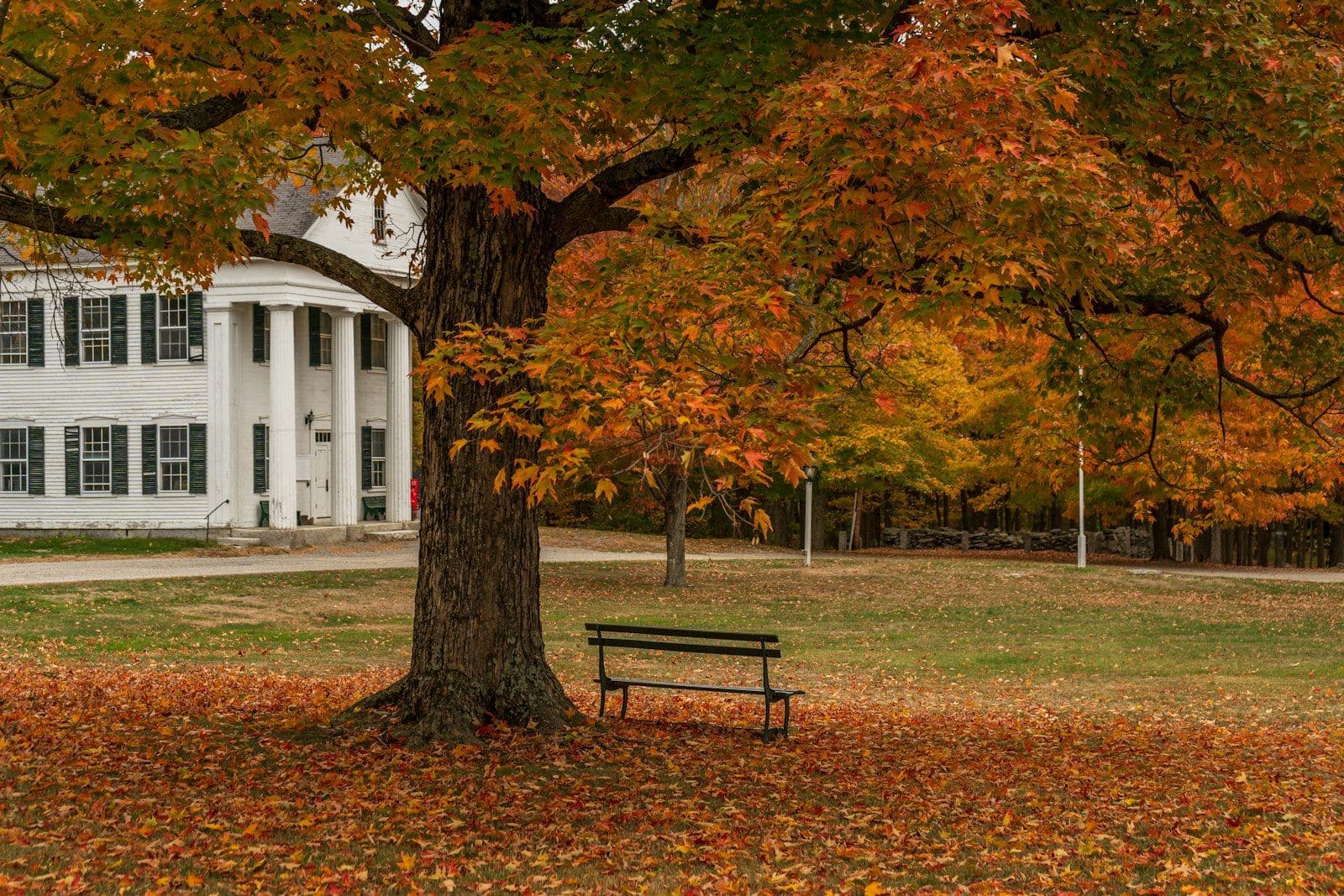
Ridgefield occupies a distinct position in Fairfield County. Forty-five minutes north of the coastline, it trades harbor views and Metro-North express service for something that most Gold Coast towns cannot offer at any price: genuine acreage. Four-acre zoning covers much of the town. Homes sit behind stone walls and mature hardwoods, separated from neighbors by meadows and protected wetlands. It is the closest thing to rural New England within commuting distance of Manhattan, and the people who choose it are making that trade deliberately.
What makes Ridgefield unusual among Fairfield County's luxury markets is its cultural density. Main Street runs roughly a mile from the Keeler Tavern Museum to the Ridgefield Playhouse, and along that stretch you will find the Aldrich Contemporary Art Museum, a dozen independent restaurants, and retail that skews local and owner-operated. The Aldrich, in particular, draws visitors from across the region, its rotating contemporary exhibitions are among the most respected in the state.
The Housing Market in Ridgefield
Ridgefield's housing stock reflects its character, substantial, private, and architecturally varied. Colonial and Georgian properties dominate, many built in the 1980s and 1990s when the town experienced its primary luxury development wave. You will also find converted farmhouses dating to the 1800s, contemporary builds tucked into wooded lots on Branchville Road, and newer construction in the $2 million to $4 million range along North Salem Road and Route 116.
Entry-level pricing for a single-family home starts around $650,000, typically for an older ranch or cape in the village area. The luxury tier (properties with significant acreage, renovated interiors, and privacy) begins at $1.5 million and extends past $5 million for estate properties on West Mountain or Ridgebury Road. Compared to Greenwich or Darien at equivalent price points, the land component in Ridgefield is dramatically larger. A $3 million budget in Ridgefield can secure 5 to 8 acres; in coastal Fairfield County, that same budget often means a third of an acre.
Schools and Family Infrastructure
Ridgefield's public school system consistently ranks among Connecticut's top performers. Ridgefield High School regularly places in the top 15 statewide by US News rankings, with particularly strong programs in STEM, performing arts, and athletics. The district operates five elementary schools, an intermediate school (Scotland Elementary serves grades 3-5), East Ridge Middle School, and the high school. Class sizes are manageable and parent engagement is among the highest in the county.
Private school options are fewer than in southern Fairfield County, though Ridgefield Academy provides a K-8 independent alternative. Many families also send children to schools in neighboring towns. Wooster School in Danbury, St. Luke's in New Canaan, or King School in Stamford are all within reasonable driving distance.
Getting to Manhattan from Ridgefield
This is the trade-off that defines Ridgefield. The town does not have a Metro-North station. The nearest stations are Branchville (on the Danbury Branch, technically within Ridgefield's southern border) and Katonah on the Harlem Line across the New York state line. Branchville to Grand Central takes approximately 90 minutes with a transfer at South Norwalk or Stamford. Katonah offers a more direct ride (roughly 70 minutes to Grand Central) but requires a 15 to 20 minute drive from central Ridgefield.
Since 2020, the commute calculus has shifted. Remote and hybrid work arrangements now dominate among the professional demographic buying in Ridgefield. Most buyers I work with commute to Manhattan two or three days per week, not five. At that frequency, the Branchville or Katonah option is workable. Driving to Stamford's downtown office corridor takes 35 to 40 minutes via Route 7, reasonable for the hybrid commuter who values coming home to ten acres and complete privacy.
What Sets Ridgefield Apart from Northern Neighbors
Redding, Weston, and Wilton share some of Ridgefield's rural character, but none of them have a walkable town center with Ridgefield's depth. Main Street functions as a genuine downtown. Luc's Café for morning coffee, Bernard's for a serious dinner, Books on the Common for weekend browsing. The Boys & Girls Club, the recreation center, and the Ridgefield Library (which underwent a major expansion in 2019) anchor community life year-round. You get rural property with small-town social infrastructure, which is a combination that very few Connecticut towns deliver.
The outdoor access is another differentiator. Ridgefield contains over 1,400 acres of protected open space. Seth Low Pierrepont State Park, the Ridgefield Rail Trail, Hemlock Hills, and the Weir Farm National Historical Park (the only national park in Connecticut, located on the Ridgefield-Wilton border) all provide trail networks that residents use daily. The town's conservation commission is active and well-funded, which protects the character that draws buyers here in the first place.
Market Conditions in Early 2026
Ridgefield's market has tightened considerably since 2021 but remains less competitive than the coastal towns. Median sale price has climbed above $900,000, with the upper tier ($2 million-plus) seeing the strongest activity. Days on market for well-priced listings average 30 to 45 days, slower than Greenwich or Westport, but significantly faster than Ridgefield's pre-pandemic norm of 90-plus days.
Inventory is constrained, particularly in the $1.5 to $3 million range where demand from hybrid-work relocations is concentrated. Sellers who have held properties for ten or more years are sitting on substantial equity, but many are reluctant to sell into a market where finding their own replacement home is difficult. This lock-in effect limits new listings and keeps pricing firm across all segments.
For buyers evaluating Ridgefield against other Fairfield County options, the value proposition is clear: substantially more land and privacy per dollar, a respected school system, an authentic downtown, and enough cultural programming to keep weekends interesting. The commute is longer than from Darien or Stamford. But for the two-day-a-week commuter who prioritizes space and quiet over proximity, Ridgefield delivers something the rest of the county cannot match.